


myFICO - Credit Score Tracking
4.34.47K Reviews
App Specs
- Version
- 4.0.23.4
- Updated On
- License
- Free
- Downloads
- 1,000,000+
- Developer
- FICO
- Categories
- Finance
- Platform
- Android, iOS
Screenshots
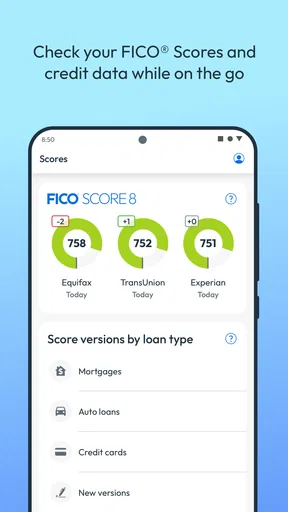
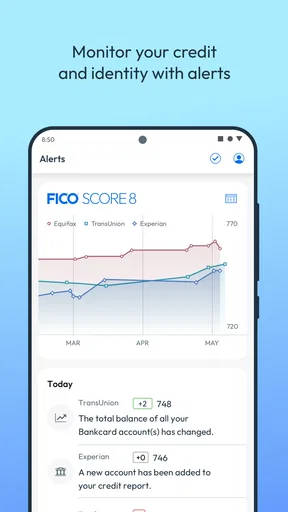
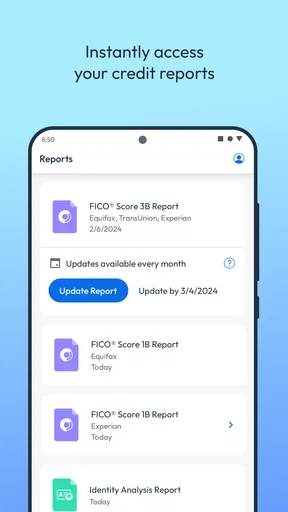
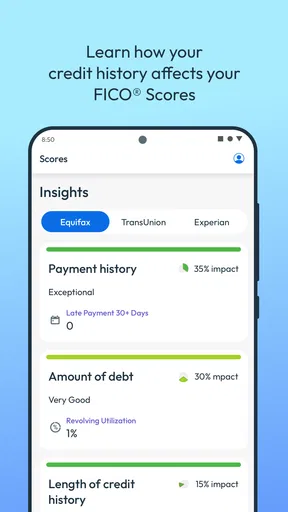
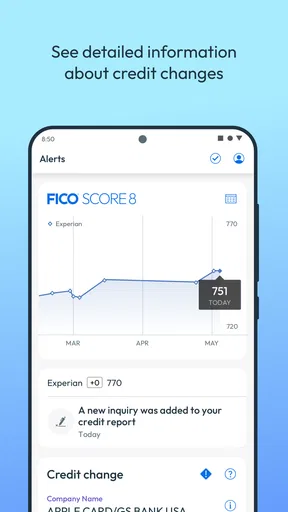
 Analysis by AppCompare
When I look at a finance app, I want one thing first: a clear answer to a practical question. Am I in a sensible position to apply for credit, or am I about to make a decision with incomplete information? myFICO is built around that question, giving users access to their FICO Score and an Equifax credit report in one mobile experience. I find that focus more useful than a broad money-management app when the immediate concern is credit cards, a mortgage, or a loan.
Developed by FICO, this free finance app is aimed at everyday credit monitoring rather than budgeting, investing, or banking. It is rated for Everyone, has passed the one-million-install mark, and holds an average rating of 4.3 from roughly twelve thousand ratings. Those figures suggest that it has found a substantial audience, although they do not remove the need to understand what a score and report can—and cannot—tell you.
Why the FICO Score is the app’s most useful capability
The central strength here is the emphasis on the FICO Score instead of treating every credit number as interchangeable. That distinction matters because people often see different scores in different financial products and assume one of them must be wrong. In reality, lenders can use different scoring models, credit-report sources, and timing. A FICO-focused app gives you a more relevant reference point when your decision involves borrowing.
In my experience, the value is not simply opening the app and admiring a number. The score becomes useful when I connect it to a decision: whether to wait before applying for a new card, whether to review a report before speaking with a lender, or whether a recent account change appears to have affected my credit picture. The number is the starting point; the report and the timing around it provide the context.
The Equifax report is especially important for that reason. A score can alert me that something changed, but a report can help me investigate what changed. I would use the app as a checkpoint before a major application, not as a promise that a particular lender will approve me or offer a specific interest rate. A credit score is a decision aid, not a guaranteed lending outcome.
This focus also makes the app different from many general finance tools. Budgeting apps are better for tracking spending, categorizing transactions, and planning cash flow. Bank apps may show a score as an extra feature, but credit monitoring is often only one small part of the experience. myFICO is more appropriate when credit itself is the subject, especially if I want to examine the relationship between the score and the underlying Equifax report.
What I would check before trusting the number
I would begin by checking the date and identity of the information shown, then compare the report with my own recent activity. A recently opened account, a balance that has not yet been reported, or an old item that I expected to disappear can change how I interpret the screen. This is one of the less obvious habits that makes the app more useful: I would not react to a score in isolation.
Worth Reading Before You Choose

EA SPORTS FC Mobile 26 Is a Bigger Football Game, but It Takes Time

Flipboard Shows What News Apps Must Do Beyond the Feed

Switching to Android Auto Means Rethinking Your Driving Routine

Google Calendar Makes a Crowded Week Easier to Manage

Ludo King Makes the Most of the Minutes Between Plans

Baby Panda World Brings Quick Play to Modern Phones, but Its Game Library Feels Busy
I would also keep a simple personal note of the date I checked the score and what credit events had happened beforehand. That creates a timeline. If the number moves later, I have a better chance of connecting the change to a reported balance, an application, or another account event instead of guessing. The app provides the credit view; my own timeline supplies the missing everyday context.
Another useful approach is to read the report when nothing seems wrong. People often wait until they are preparing a mortgage application, but that is a stressful time to discover an unfamiliar account or outdated information. Reviewing the report earlier gives me time to understand the entry and decide what action is appropriate, rather than trying to solve every question immediately before a lender checks my credit.
How the experience works in a real credit decision
The app’s practical workflow is straightforward in concept. I open it to review the FICO Score, move from the summary to the Equifax report, and then use the report to put the score into context. The important part is resisting the urge to treat the first screen as the whole story. A score is easy to remember, while the details that explain it require slower reading.
For someone considering a credit card, I would use myFICO before submitting an application. First, I would inspect the report for accounts, balances, and inquiries that I recognize. Next, I would think about whether the application is necessary now or whether waiting would make more sense. This does not predict approval, but it can prevent an avoidable application made while I am overlooking a reporting issue.
For a mortgage or loan, I would use it even earlier. A large borrowing decision has more consequences than a casual card application, so I would treat the app as part of preparation rather than a last-minute check. I would review the report, gather questions, and discuss the situation with the lender. The app can help me arrive better informed, but it does not replace the lender’s process or the documents that lender may request.
One trade-off is that credit information is time-sensitive. A screen can be accurate for the moment it reflects, yet not include a payment or balance that has not reached the reporting system. That means I would avoid checking immediately after making a financial change and assuming the result must already show it. The best interpretation comes from knowing when the relevant account activity was likely reported.
Another point that deserves attention is the difference between monitoring and repairing. The app can help me notice something that deserves investigation, but noticing an issue is not the same as correcting it. If I found an unfamiliar account or inaccurate entry, I would document what I saw and follow the appropriate reporting or creditor process. I would not expect a score-tracking screen alone to resolve the dispute.
A realistic everyday scenario
Imagine I am planning to replace an aging car and may need financing. Before visiting a dealer, I would check myFICO at home. I would review the score, then read the Equifax report for unfamiliar inquiries, accounts, or balances that might affect how I understand my position. If something looked inconsistent, I would investigate before allowing several applications to happen during a single shopping trip.
I would also use the report to make my conversation with a lender more precise. Instead of saying, “My credit looks fine,” I could ask about a particular account or reporting date. If everything looked familiar, I would still remember that the lender’s decision could use a different score, different information, or additional financial details. The benefit is preparation and awareness, not certainty.
The same workflow works for a first home purchase, although the stakes are higher. I would check well before speaking with a lender, keep records of questions, and avoid making unnecessary credit applications while preparing. In that situation, the app is most valuable as an early warning and organization tool. It helps me identify what I need to understand before the formal process begins.
Small habits that make the app more useful
My first tip is to compare changes with events, not with emotions. A lower number can feel alarming, but the report may show a timing issue or a balance change rather than a permanent problem. I would look for a concrete explanation before deciding that my overall credit position has dramatically changed.
My second tip is to use the report as a checklist for identity and account accuracy. I would confirm that the accounts belong to me and that the basic details make sense. This is more valuable than repeatedly refreshing the score because it turns passive monitoring into an active review of the information lenders may see.
My third tip is to separate “I want a higher score” from “I need to apply now.” Those are different goals. If I am not applying for anything soon, a score change may not require immediate action. If I am about to borrow, the report deserves more attention than a quick glance at the headline number. This distinction prevents the app from encouraging unnecessary credit activity.
Finally, I would avoid using a single check as proof that everything is settled. Credit reporting moves over time, and an account can be updated after I last looked. Regular, calm reviews are more useful than a frantic inspection only when a lender is waiting.
Trade-offs, limitations, and alternatives
The clearest limitation is that a FICO Score and an Equifax report do not represent every possible credit view. A lender may use another bureau, another scoring version, or information that has changed since the app’s data was updated. For that reason, I would not use myFICO to compare offers as though its score were an exact quote of the lender’s decision.
There is also a psychological trade-off. Frequent checking can make some people overreact to normal movement. If I were likely to change financial plans every time the number moved slightly, a less frequent review routine might be healthier. The app is most helpful when it supports planned decisions, not when it becomes a source of daily anxiety.
Compared with a bank app that displays a credit score, myFICO offers a more credit-centered reason to open the app. Compared with a budgeting service, it does not serve the same purpose: it is not where I would go to understand household spending or build a monthly plan. Compared with checking a report only when applying for credit, it encourages earlier awareness. Each alternative can be better depending on the question I am trying to answer.
Privacy and account security also deserve ordinary caution because this is sensitive financial information. I would use a strong device passcode, keep the operating system current, and avoid reviewing personal credit details on a device or network I do not trust. These are not reasons to reject the app; they are sensible precautions for any service that puts financial information within reach.
The current version is 4.0.23.4 and requires at least operating system version 12. That is an important practical check before installation. If a phone cannot meet that requirement, the issue is not the app’s credit usefulness but simple compatibility. The app has been available since August 18, 2015, and its continued presence gives it a longer track record than a newly launched credit tool, while the current version remains the one I would evaluate on my device.
Because the app is free, it is easy to try without treating it as a major financial purchase. Still, “free” should not be confused with a complete replacement for every credit service. I would judge it by whether the FICO-and-Equifax combination answers my particular question. If I mainly need spending categories, account balances, or bill reminders, another finance app will probably fit my routine better.
Who gets the most value from this focused approach?
I think myFICO is strongest for people preparing for meaningful borrowing: prospective home buyers, car shoppers, applicants considering a new card, and anyone who wants to understand an Equifax report before a lender reviews it. It is also useful for people who have had a recent credit event and want a structured way to inspect what may have changed.
It can help someone new to credit as well, provided they understand that the score is not a grade that must be checked constantly. A beginner can learn the difference between a score and a report, practice recognizing account information, and build the habit of reviewing credit before making an application. That educational value comes from using the app thoughtfully, not simply from installing it.
I would recommend skipping it as a primary finance tool if the main need is budgeting, debt payoff planning, investment tracking, or day-to-day banking. Those tasks call for different information and workflows. I would also be cautious about relying on it alone when a lender has given me a specific score or reporting requirement. In that case, I would use the app for preparation and ask the lender which information matters for the application.
For me, the deciding question is simple: do I need a clearer view of my FICO Score alongside my Equifax report? If the answer is yes, the app has a focused purpose and a sensible place in a credit-checking routine. If the answer is no, its narrow concentration may feel less useful than a broader financial dashboard.
After using it as a credit decision companion, my opinion is positive but measured. The best feature is not a flashy presentation; it is the connection between a recognizable FICO Score and the report that gives that score meaning. The app is free, available to Everyone, and backed by FICO, with an average rating of 4.3 from about twelve thousand ratings and more than one million installs. Those details support its credibility as a widely used finance app, but the real test is whether it improves my preparation.
My recommendation is to use myFICO before important credit decisions, not as a crystal ball. Check the report, build a timeline around account activity, investigate unfamiliar information, and remember that a lender may evaluate a different view. Used that way, it gives me something genuinely practical: a clearer starting point before I apply, negotiate, or ask better questions.
Pros
- Official FICO scores help users understand lender-focused credit data.
- Score history makes it easier to monitor changes over time.
- Credit monitoring can alert you to suspicious activity or identity theft.
- Personalized insights may suggest actions to improve credit health.
- Available on both Android and iOS for convenient access anywhere.
Cons
- Many advanced features require a relatively expensive paid subscription.
- FICO scores may differ from scores shown by banks or free credit apps.
- Frequent score checking can encourage unnecessary financial anxiety.
- Some alerts and updates may not appear immediately after account changes.
- The app is most useful to U.S. consumers with established credit files.
FAQs for myFICO - Credit Score Tracking
What is myFICO - Credit Score Tracking used for?
myFICO is designed to help users monitor their FICO credit scores, review credit report information, and understand the factors that may be influencing their credit profile. The app can be useful when preparing to apply for a loan, credit card, mortgage, or other financing. It presents credit information in a more accessible format, although it should be used as a monitoring and educational tool rather than as financial advice.
Does the myFICO app provide the same credit score that lenders use?
myFICO focuses on FICO Scores, which are widely used by lenders, but the exact score a lender checks can vary. Different lenders may use different FICO versions, credit bureaus, and industry-specific scoring models. As a result, the score displayed in the app may not exactly match the score seen by a bank or lender at a particular moment. Users should check which score version and bureau information their plan includes.
Is myFICO free to download and use?
The myFICO app may be available to download without an upfront charge, but access to many important features generally depends on the selected myFICO membership or subscription plan. Depending on the plan, users may receive score updates, credit reports, monitoring alerts, and additional identity or credit-related tools. Before subscribing, review the current pricing, billing frequency, renewal terms, and cancellation policy shown in the app or official store listing.
How often does myFICO update credit scores and reports?
Update frequency depends on the myFICO plan and the information supplied by the credit bureaus. Credit reports do not usually change every time a payment is made because lenders report information on their own schedules. Some plans provide more frequent score updates, while others may update periodically. If a recent account change is not visible immediately, it may simply be waiting for the lender or bureau to report it.
Can myFICO help me detect identity theft or errors on my credit report?
myFICO can help users notice unusual changes, unfamiliar accounts, inquiries, or other activity by providing credit monitoring and report-related information, depending on the subscription plan. However, no monitoring service can guarantee that every form of fraud will be detected instantly. If you find an error or suspicious activity, review the relevant report carefully, contact the credit bureau and creditor, and follow official identity-theft reporting procedures.


